



PR CENTER
NEWSROOM
Method for single-layer slab reinforcement arrangement
01-17-2026
Table of content
Single-layer slab reinforcement arrangement is a crucial step in concrete slab construction, determining the durability and load-bearing capacity of the structure. Failure to follow proper principles can lead to cracking, deflection, or reduced lifespan. In this article, BMB Steel will help you understand what single-layer slab reinforcement is, the correct arrangement method, and important notes during construction.
1. What is single-layer slab reinforcement?
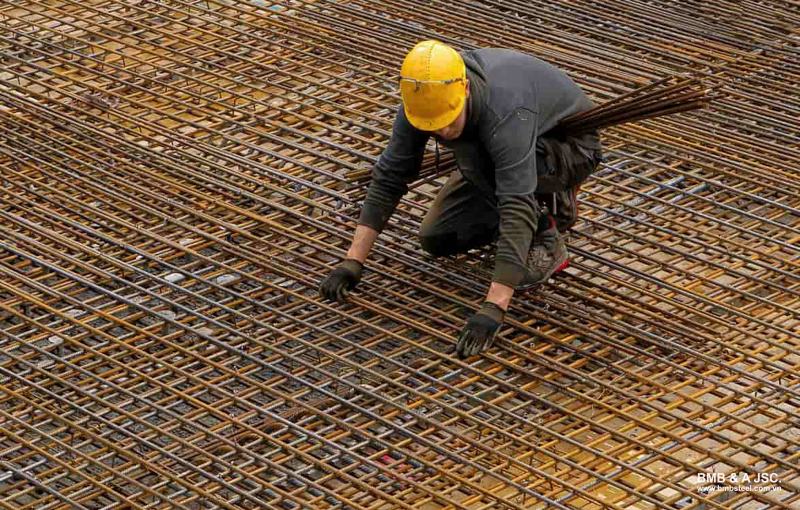
Single-layer slab reinforcement is a commonly used structural form in concrete floor construction. It is a system of reinforcing bars that directly bear loads, helping to strengthen and increase the load-bearing capacity of concrete slabs. The reinforcement is arranged around the slab and works together with beams and columns, which serve as the supporting framework. The beams transfer the loads to the columns, and then the columns continue to transmit these loads down to the building foundation.
This type of reinforcement is often applied in small-scale, low-rise projects such as residential houses, small factories, or areas like septic tanks, manholes, cantilever slabs, roof slabs, etc.
Read more: Process and unit prices for constructing industrial factories
2. Principles of single-layer slab reinforcement arrangement
During concrete slab construction, following the correct principles of single-layer slab reinforcement arrangement is an essential step to ensure a solid structure, good load-bearing capacity, and long-term durability for the building.
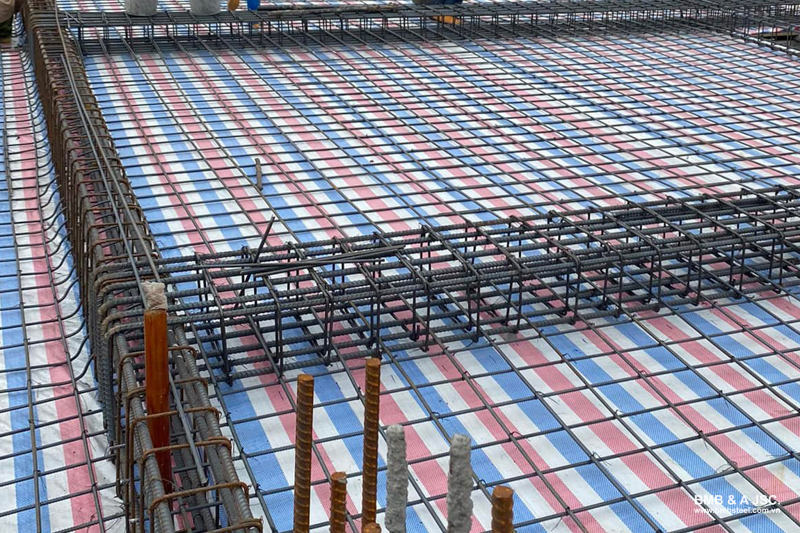
Position of slab reinforcement
According to construction principles, single-layer slab reinforcement should be placed above the beam reinforcement. This arrangement not only makes the installation process more convenient but also helps distribute the load evenly.
Height of slab reinforcement
The main load-bearing bars must be positioned at the maximum height specified in the design (H₀). This height is measured from the edge of the compressed concrete layer to the center of the tensile reinforcement bar.
Thickness of the slab reinforcement
The slab reinforcement thickness should be optimized at approximately 15 mm and have a cross-section larger than the diameter of the bar (D). This helps the concrete adhere more firmly to the steel reinforcement.
Anchoring standards for slab reinforcement into beams
- For smooth round bars, the ends must be hooked when anchoring into beams to increase bonding strength.
- For ribbed (deformed) bars in the upper layer, the minimum anchoring length must be 30D.
- For ribbed bars in the lower layer, the minimum anchoring length should be 20D to ensure strong adhesion between steel and concrete.
Thickness of the protective concrete layer
When pouring concrete over the single-layer slab reinforcement structure, the protective concrete layer must have a minimum thickness of 15 mm and not be less than the diameter of the reinforcing bar. This minimizes steel corrosion and helps maintain the bond between concrete and reinforcement.
Read more: 13+ Modern popular industrial building drawings
3. Methods of single-layer slab reinforcement arrangement
Currently, there are 2 common methods of single-layer slab reinforcement arrangement widely applied by engineers and construction units.
3.1. One-way slab reinforcement
A one-way slab is a type of structure that functions in only one direction. The entire load of the slab is transferred to the beams in the perpendicular direction.
The reason this type of slab is formed is due to the significant difference between the length and width of the slab, which causes the load to be transferred in only one direction instead of being evenly distributed to all beams. Typically, a slab is considered a one-way slab when the ratio of its length to width is greater than 2.
3.2. Two-way slab reinforcement
Unlike the one-way slab, a two-way slab reinforcement structure works in both directions simultaneously, allowing the load to be evenly distributed to the surrounding beams.
A slab is classified as a two-way slab when the ratio of its length to width is equal to or less than 2. This type of slab is commonly used in structures with loads below 1000 kg/m².
Both of the above single-layer slab reinforcement methods are considered safe, efficient, and easy to construct. However, to achieve optimal performance, engineers must carefully calculate the internal forces of each slab type. In cases of uncertainty, traditional reference tables can be consulted for accuracy.
Read more: How to read structural steel drawings meticulously and precisely
4. Is single-layer slab reinforcement safe?
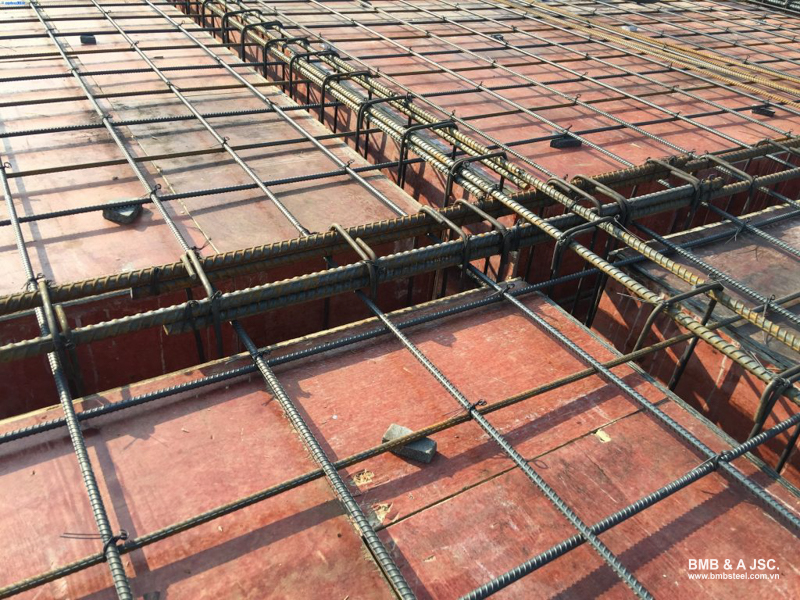
- Today, single-layer slab reinforcement structures are widely used in many construction projects. This type of structure offers a high strength-to-weight ratio, making it lighter than many other building materials and helping to reduce the overall load of the slab.
- One of the most outstanding advantages of single-layer slab reinforcement is its high flexibility, ease of fabrication, suitability for mass production, and lower cost compared to other materials. When renovation or expansion is needed, engineers can seamlessly combine new slab reinforcement with the existing structure without affecting its load-bearing capacity. If designed and constructed properly, single-layer slab reinforcement can have a lifespan of several decades, withstanding impact and harsh weather conditions.
- However, besides its advantages, there are also some limitations to consider. Since it is made from iron alloy, the material is prone to corrosion over time if not properly maintained or treated against rust. Additionally, under high temperatures, steel tends to expand and deform, which may affect the overall stability of the structure.
- In terms of safety, the use of single-layer slab reinforcement depends on the load and beam structure of the building. For projects with solid and stable beams, this type of slab is completely safe. However, for high-rise buildings, using single-layer slab reinforcement is not recommended, as it may weaken the foundation and beam structure.
5. Notes when arranging single-layer slab reinforcement

To ensure structural durability and safety during construction, the arrangement of single-layer slab reinforcement must follow several key principles:
Determine the correct position and connection method
Accurately identifying the position and method of connecting steel bars allows engineers to calculate the slab’s load-bearing capacity precisely, preventing cracking or structural failure.
Integrate the slab reinforcement with the beam system
The reinforcement must be arranged consistently with beams, roof slabs, and related components. Proper coordination helps avoid additional installation or later modifications, minimizing the risk of damage to the steel structure.
Avoid using square or hollow steel bars
Square and hollow steel bars have significantly lower load-bearing capacity compared to solid round bars. Therefore, these types should not be used in single-layer slab reinforcement structures to prevent potential safety hazards.
Plan a clear and precise reinforcement layout
Engineers should prepare detailed reinforcement drawings to ensure accuracy. It’s also essential to control vibration levels and oscillation frequencies during construction to prevent resonance between the structure and later activities, ensuring overall building safety.
Use high-quality standard steel
Standard-grade steel must have good ductility, moderate hardness, and high machinability. In contrast, substandard steel tends to be brittle, difficult to cut or drill, and easily broken, which can seriously compromise the safety of the concrete slab structure.
Proper single-layer slab reinforcement arrangement ensures the concrete floor achieves optimal rigidity, enhanced load-bearing capacity, and long-lasting durability for the entire structure. From identifying the slab type and selecting standard-grade steel materials to following reinforcement placement and beam anchoring principles, every detail plays a crucial role in the overall safety and performance.
With over 20 years of experience in steel structure construction, BMB Steel has established its reputation as one of the leading and most trusted steel contractors in the region. If you are looking for a high-quality, safe, and cost-effective slab reinforcement solution, we are the reliable partner to accompany you in every project.

5 months ago
Learn about one-way and two-way strip foundations, their differences, pros and cons, and considerations for choosing the right solution for your project.

2 years ago
Discover the growing demand for steel structures in global construction. Learn about steel structure types, advantages, and key applications.

5 months ago
An overview of commonly used heat-resistant roof materials, such as tiles, insulated metal roofing, etc., which are suitable for various types of buildings.

5 months ago
What is an EPC contract? Learn how EPC contracts work, contracting strategies, the role, pros, cons of EPC contractors and differences between EPC and EPCM.

8 months ago
What is a bolt? Learn about bolt structure, classification, applications, how to choose bolts that meet technical standards in construction and engineering.
Comment
(0)


The erection of steel structure consists of several different steps. The following writing shall provide detailed information about this process.

Advancements in steel structures have been widely used in the construction of transport infrastructure in Southeast Asia. The writing below shall explore some of the innovative uses of steel structures.

Steel structures have been widely used in constructing healthcare facilities because they offer a number of advantages. The writing below shall explore more thoroughly about this application.

For the time being, the steel structure with tile truss roof is popularly recommended to use. What are the advantages of this structure?
It is necessary to include clear and detailed engineering documents in the stage of preparing for the steel erection process. The following writing shall provide detailed information about these documents.

Building pre-engineered steel buildings is the trend of today. Every pre-engineered steel building project needs to have a complete and detailed steel structure drawing, then the finished product will meet the requirements.

