


PR CENTER
NEWSROOM
What is an EPC contract? The role of the EPC contractor
05-05-2026
Table of content
In large-scale construction and industrial projects, the EPC model is increasingly chosen by project owners due to its integrated structure and execution efficiency. In this article, BMB Steel provides a comprehensive overview of what is an EPC contract, when EPC contractors are engaged, their roles and responsibilities, common EPC contracting strategies, key advantages and disadvantages, and the fundamental differences between EPC and EPCM delivery models.
1. What is an EPC contract?
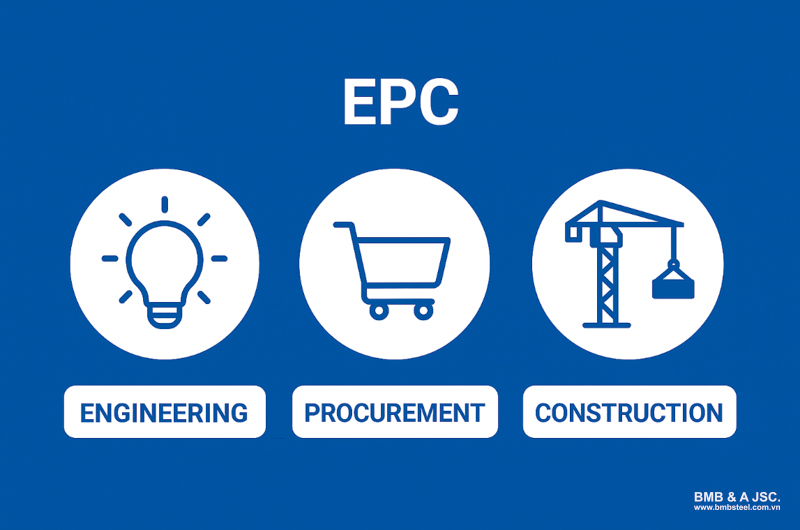
EPC stands for Engineering, Procurement, and Construction. So what is an EPC contract?
An EPC contract is a comprehensive project delivery agreement that brings together detailed engineering, material and equipment procurement, and construction activities under a single contract.
This contracting approach is particularly suitable for complex industrial and infrastructure projects, offering a streamlined execution process and providing the owner with a single point of accountability.
2. When is an EPC contractor engaged?
In most projects, the EPC contractor is appointed after the front-end engineering design phase has been completed and the owner has reached the final investment decision. At this point, the owner issues a notice to proceed, formally authorizing the EPC contractor to begin detailed engineering, procurement, and construction activities.
3. The role of the EPC contractor

The EPC contract framework clearly defines roles and responsibilities, helping to improve certainty over cost control, project schedule, and performance outcomes throughout the project lifecycle. As implied by the name, the EPC contractor is responsible for three core areas:
- Engineering: The contractor develops detailed engineering and project designs based on the owner’s requirements, ensuring that all technical specifications meet the intended functionality and performance standards.
- Procurement: The contractor manages the full procurement process, including sourcing, negotiating, and purchasing materials, equipment, and subcontracted services. This also involves coordinating logistics and supply chains to ensure timely delivery and avoid disruptions to the construction schedule.
- Construction: The contractor leads and manages onsite construction activities, coordinating labor, equipment, and resources to deliver the project efficiently, on time, and in compliance with quality and safety standards.
4. When EPC contracts are used?
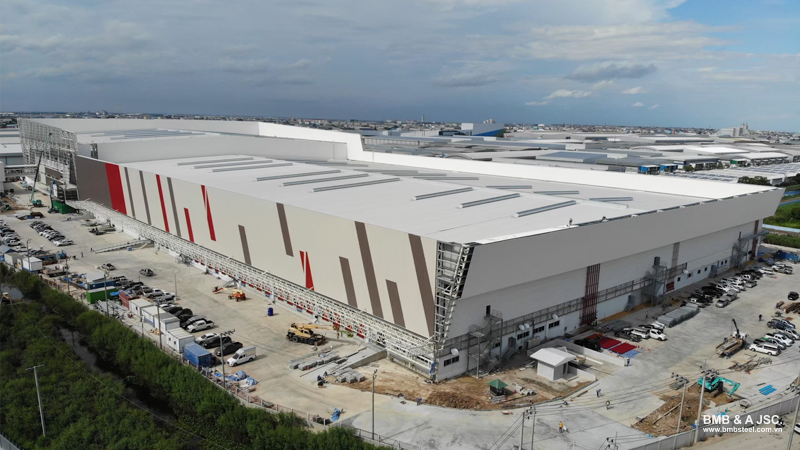
EPC contracts are commonly used when project owners or investors prefer to procure a project based on required functionality and defined performance outcomes, rather than relying on a fully developed set of detailed designs and construction drawings at the outset.
From the owner’s perspective, the key motivation for choosing an EPC contract is the ability to transfer a significant portion of project risks to the EPC contractor. These risks typically include schedule delays and time extensions, demurrage, cost overruns arising from variations, and performance shortfalls.
Therefore, it is essential for owners to thoroughly assess the EPC contractor’s experience and track record, not only considering experience within the relevant industry sector (such as energy, transportation, or manufacturing), but also projects specifically under EPC contractual frameworks, where performance guarantees and accountability are critical.
EPC contracts are most often structured as turnkey agreements. This means that once construction is complete, the project is delivered as a fully operational asset, ready for immediate use without further modification or intervention from the owner. In practical terms, the owner simply needs to “turn the key” to begin operations.
Due to the EPC contractor’s relatively early involvement in the project lifecycle, these contracts usually focus on performance-based requirements rather than highly detailed construction documentation. The EPC contractor then applies its technical expertise to complete the detailed engineering and select the most efficient, reliable, and cost-effective technical solutions.
EPC contracts are widely applied across multiple sectors, including:
- Energy infrastructure projects, such as power generation facilities.
- Large-scale infrastructure developments like airports, metro systems, bridges, etc.
- Manufacturing facilities that require precise equipment integration and operational readiness.
- Environmental and remediation projects, such as wastewater treatment plants.
5. EPC contracting strategy

The EPC contracting strategy depends on the owner’s risk appetite, project complexity, and prevailing market conditions. In practice, two contracting approaches are widely adopted: Turnkey EPC with a fixed price and Turnkey EPC with target pricing.
Turnkey with fixed price
Under a turnkey EPC contract with a fixed, lump-sum price, the EPC contractor agrees to deliver the entire project scope for a predetermined amount. Contractors typically participate in a competitive tendering process, submitting bids based on the owner’s defined technical and performance requirements. This model provides the owner with a high level of cost certainty, as the contract price remains unchanged regardless of the contractor’s actual costs during execution.
Turnkey with target pricing
As an alternative, EPC contracts may be structured using a target pricing approach, which introduces a degree of risk sharing between the owner and the EPC contractor. Similar to the fixed price model, the contractor is selected through a competitive tender process and is responsible for delivering the full project scope.
However, instead of agreeing on a fixed lump sum, the parties establish a target price for the project. This target is commonly linked to a pain-gain sharing mechanism, comparable to those used in alliance contracting models. If the project is delivered below the target cost, the cost savings are shared between the owner and the contractor. If the actual cost exceeds the target, both parties share the overrun, with the contractor’s exposure usually capped at an agreed maximum loss-sharing limit.
6. Advantages and disadvantages of EPC contractor
Like any contracting approach, EPC contracting offers a range of benefits as well as certain limitations that are detailed below:
Advantages of EPC contracts
- High level of time and cost certainty: These agreements are commonly structured as lump-sum contracts, allowing owners to clearly understand the overall project cost from the outset. In addition, EPC contracts typically include liquidated damages and indemnification provisions, offering protection to the owner in the event of delays or performance failures attributable to the EPC contractor.
- Single point of responsibility: By appointing one contractor to manage engineering, procurement, and construction, communication lines are simplified and project management becomes more efficient. This is particularly valuable for owners or asset operators who have limited experience in managing large or technically complex construction projects.
- Performance guarantees: EPC contracts also frequently include performance guarantees, providing owners and investors with confidence that the completed facility will meet the agreed quality, functionality, and operational performance standards.
- Transfer of project risks: EPC contracts allocate a substantial portion of risks to the EPC contractor, including schedule delays, cost overruns, and underperformance, thereby significantly reducing the owner’s exposure.
- Enhanced financing opportunities: A well-structured EPC contract executed by an experienced contractor can enhance project bankability. Lenders often view EPC arrangements favorably, as they reduce contractor-related risks and increase certainty of delivery, leading to improved financing terms, especially for projects structured under public–private partnerships or power purchase agreement frameworks.
Disadvantages of EPC contracts
- Restricted flexibility for changes: Once an EPC contract is signed, changes to the project scope or specifications can be difficult and costly to implement. Such modifications often result in variation claims and extensions of time, limiting the owner’s ability to adapt the project as requirements evolve.
- Higher overall costs: Because EPC contractors assume extensive risks, they typically include risk contingencies in their pricing, which can make EPC projects more expensive.
- Reduced owner involvement: Another consideration is reduced owner involvement in day-to-day project decisions. While this can streamline management and reduce administrative burden, it may also limit the owner’s direct control and influence over key aspects of project execution.
- Challenges in tender evaluation: Since EPC bids are often based on performance and output requirements rather than detailed designs, contractors may propose different technical solutions. This can make direct, like-for-like comparisons between bids more complex and time-consuming.
- Concentrated commercial exposure to the EPC contractor: EPC contracts create concentrated commercial exposure to a single contractor. If an EPC contractor encounters financial or performance difficulties, the impact on the project can be significant, potentially leading to losses that exceed contractual liability caps. Moreover, the capability and reputation of the selected EPC contractor can strongly influence financing conditions and the overall viability of the project.
7. Difference between EPC & EPCM
When clients, owners, or investors have strong in-house technical capabilities and wish to retain greater control over decision-making, they often prefer the EPCM delivery model.
EPCM stands for Engineering, Procurement, and Construction Management. Under this framework, the EPCM contractor acts primarily as a professional advisor and project manager to the owner throughout the project lifecycle.
Typical responsibilities of an EPCM contractor include:
- Refining technical requirements and clearly defining the scope of work.
- Advising on design development and identifying value engineering opportunities
- Assisting with key procurement activities.
- Managing construction execution, covering cost and schedule control, financial oversight, and contract administration.
While EPC contracting shares some similarities with a managing contractor arrangement, EPCM aligns more closely with traditional construction management contracts.
The fundamental difference lies in the allocation of commercial and legal risk. In an EPCM structure, the owner directly contracts with all engineering, procurement, and construction contractors. As a result, EPCM contractors carry significantly less commercial exposure, while owners gain greater flexibility and control.
The above information provides a comprehensive overview to help clarify what is an EPC contract. A well-structured EPC contract, combined with the selection of an experienced and financially sound EPC contractor, can significantly increase the likelihood of successful project delivery and long-term asset performance. BMB Steel hopes this has provided you with a comprehensive overview, helping you gain a solid foundation to apply EPC effectively in your work and choose the most suitable contract model for each type of project.

5 months ago
Learn about one-way and two-way strip foundations, their differences, pros and cons, and considerations for choosing the right solution for your project.

2 years ago
Discover the growing demand for steel structures in global construction. Learn about steel structure types, advantages, and key applications.

5 months ago
An overview of commonly used heat-resistant roof materials, such as tiles, insulated metal roofing, etc., which are suitable for various types of buildings.

9 months ago
What is a bolt? Learn about bolt structure, classification, applications, how to choose bolts that meet technical standards in construction and engineering.

9 months ago
Detailed guidelines for proper single-layer slab reinforcement arrangement, important notes to ensure structural safety and extend the building’s lifespan.
Comment
(0)


Learn about what is shaped steel, its production process, common types of shaped steel, pros & cons, applications in construction, industry, daily life.

Steel is a widely used construction material with numerous benefits. This article explores types of steel structure materials, their properties, and applications.
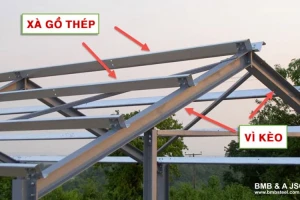
Purlin supports roofs and walls ensuring stability, durability and distributing loads in buildings. Let's find out "What is purlin" in the article below.
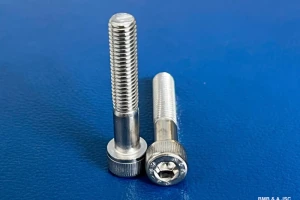
What is a bolt? Learn about bolt structure, classification, applications, how to choose bolts that meet technical standards in construction and engineering.

Steel structures have been widely used in the construction industry. The writing below shall explore some applications of steel structures in the construction of sports and entertainment facilities.

When constructing and erecting steel structures, builders and investors need to understand how to operate and build smoothly and conveniently. What should be noticed in steel structures’ construction and erection process

