


PR CENTER
NEWSROOM
What are shop drawings? Roles & implementation process
03-22-2026
Table of content
In the construction industry, technical drawings play a crucial role in ensuring accurate construction in accordance with the design. However, initial design drawings are often not detailed enough for on-site implementation. This is why shop drawings were developed and have become an indispensable document during the construction process. So, what are shop drawings, what roles do they play, and how are they implemented? In the following article, BMB Steel will help you gain a comprehensive understanding of shop drawings in construction.
1. What are shop drawings?
Generally, initial design drawings only present preliminary solutions and are not detailed enough for actual on-site construction. To accurately execute each construction item, a more detailed type of drawing is required, known as a shop drawing. So, what are shop drawings?
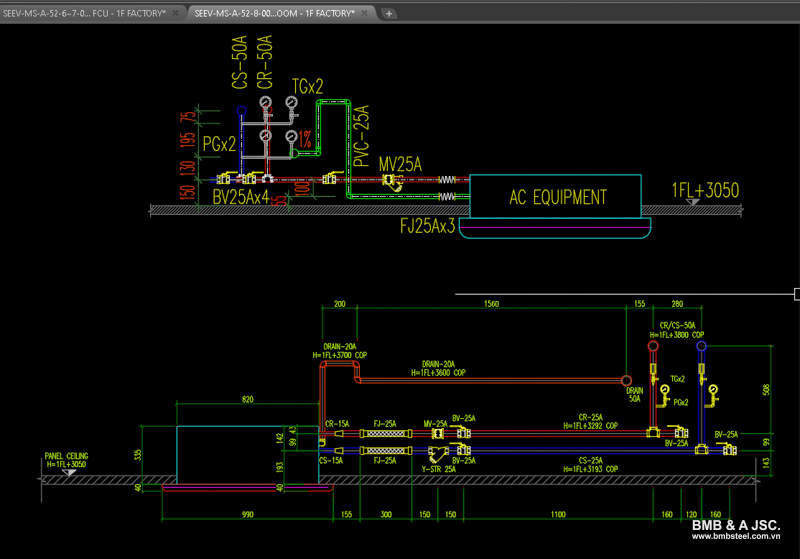
A shop drawing is a detailed technical drawing developed based on approved technical design drawings, combined with technical requirements (Spec) provided by the project owner. Based on these documents, the contractor prepares shop drawings for each specific work item within their construction scope and submits them to the project owner for review and approval.
The content of shop drawings clearly shows exact dimensions, detailed configurations, installation methods, material types, and necessary technical requirements, ensuring that construction is carried out correctly.
Some common types of shop drawings include: steel structure shop drawings, finishing and tiling shop drawings, gypsum ceiling and partition shop drawings, indoor electrical lighting system shop drawings.
Read more: 13+ Modern popular industrial building drawings
2. The role of shop drawings in construction

During the construction process, most work items require the use of shop drawings. In practice, design drawings typically only present overall concepts and general solutions, and do not provide detailed information about structures, connections, and construction methods for each specific work item.
To clearly understand the structural details and technical requirements of a project, construction engineers often need to compile information from multiple drawings. Meanwhile, shop drawings are developed directly from structural drawings and architectural drawings, making them more systematic, comprehensive, and detailed.
Shop drawings are also an indispensable part of construction documentation and contracts. They serve as the basis for construction execution, inspection, acceptance, and the preparation of as-built drawings after the project is completed.
Read more: What is the pre-engineered steel building? The optimal solution for your projects
3. Categories of shop drawings
Shop drawings are usually developed for each specific work item, corresponding to the construction activities of a project. In general, shop drawings include the following main categories:
- Structural drawings: Provide complete information about the load-bearing structure of the project, including detailed components such as concrete, reinforcement steel, beams, slabs, etc.
- Architectural drawings: Show finishing details of the project, including the location, dimensions, and configuration of elements such as doors, partitions, walls, finishing paint, etc.
- Mechanical, electrical, and plumbing (MEP) drawings: Focus on technical systems, including electrical systems, water supply and drainage, air conditioning, ventilation, etc.
Read more: Latest factory construction cost quote
4. Shop drawing design process

The shop drawing design process is carried out through multiple steps, starting from receiving the initial design data to finalizing and obtaining approval for construction. Specifically, the process typically includes the following steps:
Step 1: Collect information from design drawings
In the first step, engineers collect and review relevant documents such as technical design drawings, basic design drawings, tender drawings, and accompanying technical requirements.
Step 2: Develop detailed drawings
Based on the collected data, engineers develop shop drawings with a higher level of detail. This includes details such as the configuration of each component, connections between structural elements, installation methods, material specifications, specific technical parameters.
Step 3: Coordination and drawing review
After completion, shop drawings are submitted to relevant parties such as architects and engineers for review and cross-checking. During this stage, coordination between different disciplines is reviewed, conflicts are identified, and necessary adjustments are proposed.
Step 4: Revision and finalization
Based on feedback received, shop drawings are revised to ensure feasibility, accuracy, and full compliance with technical requirements. After finalization, the drawings are submitted to the project owner and relevant authorities for approval, serving as the official basis for on-site construction.
Read more: Professional pre-engineered steel building construction process
5. Requirements for engineers when preparing shop drawings

In addition to clearly understanding what shop drawings are, engineers must also meet various professional requirements and possess practical skills when developing shop drawings. Engineers responsible for shop drawings should pay attention to the following points:
Proficient in shop drawing software
For projects with simple structural systems, shop drawings can be prepared using 2D drafting software, typically AutoCAD. However, for large-scale projects with complex structures, engineers responsible for shop drawings need to be proficient in 3D modeling software such as Revit or Tekla Structures to ensure high accuracy and to make project updates and modifications easier and more visual.
Compliance with technical drawings
Technical drawings serve as the fundamental basis for developing shop drawings. Engineers must not draw based on personal assumptions or disregard design principles. All parameters related to dimensions, configurations, and materials must strictly follow the approved design documents to ensure that quantities and materials are accurate and that all stakeholders can easily understand and implement the drawings.
Strict adherence to basic design drawings
When transitioning from basic design drawings to detailed construction drawings, careful cross-checking and full control of all work items are essential to avoid omissions or inconsistencies.
Drawing presentation skills
Shop drawings directly affect the determination of dimensions, quantities, and material requirements, which are critical for cost estimation, inspection, acceptance, and as-built documentation. Therefore, shop drawings must be presented clearly, logically, and with complete information.
Practical construction experience
Engineers who regularly work on construction sites and can observe and understand real construction conditions can develop shop drawings more quickly and accurately. In practice, many engineers have strong theoretical knowledge but lack hands-on construction experience, which makes it difficult to complete shop drawings effectively.
Through this article, it can be seen that shop drawings are a technical document that plays a key role in the construction process. Understanding what are shop drawings, the design process, and the requirements for engineers involved helps project owners, contractors, and engineers minimize errors and ensure construction quality.
If you are looking for a reputable company to develop shop drawings and execute high-quality steel structure works, BMB Steel is a reliable choice, helping ensure project progress and quality.

2 years ago
Explore factory design processes with BMB Steel. Discover 2026 pricing for factory design and construction services, optimized for space, cost, and ensure high-quality construction.
5 months ago
Strip foundation drawing for a two-story house shows details on dimensions, design standards, and technical requirements, helping ensure safe construction.

6 months ago
What factory construction permit costs in 2026 are included, how much to budget, processing time, and which authority issues the permit? Find out here.

9 months ago
What are reinforced concrete roofs? Learn about their structure, pros and cons, types, applications in construction, and key notes for proper installation.

9 months ago
Learn about 4 types of metal roof ventilation, why it matters, and proper installation methods to improve energy efficiency and extend your roof’s lifespan.
Comment
(0)


If you are a business owner and are wondering about finding a professional construction company then this article is for you.
Pre-engineered steel buildings are commonly used in the food industry due to their ability to meet specific owner requirements. This article will explore some common applications.

Designing factories with high-quality standards will help owners utilize most of the land's functions, save costs, and create a safe working environment for employees, which allows them to work efficiently.
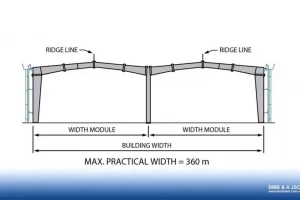
Explore span in factory construction. Learn about various types of spans, how to calculate them, their applications when designing factories.
Prefabricated buildings are an emerging trend in construction, offering affordable, eco-friendly, and quick-to-build solutions. Starting at $2,000, these structures provide flexibility and efficiency for various industries and residential projects.

Building industrial structures for warehouses, production workshops, and storage of goods is essential in business. To optimize costs and create efficiently laid out workshops, single-storey industrial building structures have emerged as a solution.

